Clarksville TN Chiropractors May Help Scoliosis
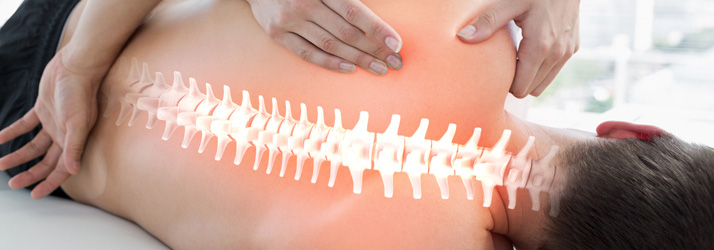
Scoliosis is a sideways curvature of the spine. This is the short version of what it is, how it is found, and what does and does not help. For the condition overview and treatment options, continue to our scoliosis guide.
What is Scoliosis?
A sideways curve of more than ten degrees, measured on an X-ray using the Cobb angle, is classified as scoliosis. The most common form is idiopathic, meaning no cause is identified, and it usually appears during the growing years. Other curves are secondary to a neurological condition, to trauma, or to vertebrae that formed differently before birth. Functional scoliosis results from something outside the spine, such as a leg length difference or muscle spasm, and is not a deformity of the vertebrae. A structural curve should not be presented as a posture habit that a person can simply correct.
Common Symptoms of Scoliosis
Adolescent idiopathic scoliosis is frequently painless, which is why it is often noticed visually rather than reported as a symptom: uneven shoulders, an uneven waist, a lean to one side. Significant pain is not a typical feature of it, and is a reason for medical assessment rather than an assumption that the curve explains it. Larger curves, and adult degenerative curves, are more often associated with back pain, stiffness and muscular fatigue. Effects on heart and lung function are associated with severe curves, not with the mild and moderate curves that make up most cases.
Chiropractic Treatment for Scoliosis
Manual treatment and postural approaches do not straighten a structural curve, and adjustments do not reverse a Cobb angle. For a curve that is being monitored, the established options are observation, bracing while a person is still growing, scoliosis-specific exercise programmes, and surgery for large or progressing curves, and the specialist managing the curve is the right person to guide those decisions.
Where a structural curve is present and painful, manual care is directed at the pain, the stiffness and the movement, not at the curve. Changes in pain and activity should be measured separately from the curve itself. Feeling less stiff does not demonstrate that a structural curve has changed.
We will tell you what we find, including when what we find is not something we treat. If we are not able to help you with your problem or are unable to reduce your pain levels, we will make sure to give you a recommendation to another experienced provider.
What the bracing research measured
The BrAIST study studied adolescents at risk of curve progression, comparing bracing with observation. In its randomized group, 75% assigned bracing reached skeletal maturity without progression to a curve of at least 50 degrees, compared with 42% assigned observation. This was an outcome about progression during growth, not a promise of a straight spine or pain relief.
The study included both randomized and treatment-preference groups, and its findings apply to the selected adolescent population. They should not be transferred to an adult degenerative curve or used as evidence for adjustments. The clinician following the curve can explain how age, remaining growth, curve size and change over time affect your options.
Bring a monitoring record, not just a posture photograph
| Information to bring | Question it helps answer |
|---|---|
| Previous imaging reports with dates | Has the measured curve changed over time? |
| The specialist's follow-up plan | When is reassessment due, and what would bring it forward? |
| Pain and activity notes | Is there a separate symptom problem to investigate? |
| Brace or exercise instructions already given | How should different clinicians coordinate care? |
A new weakness, difficulty walking or substantial unexplained pain needs medical assessment rather than being attributed automatically to the curve. For nonurgent pain or stiffness, contact our team to discuss whether a musculoskeletal assessment can complement the existing monitoring plan.
Follow the evidence
Research, with context.
Published sources behind the discussion. Read the findings alongside the limits; a study is not a diagnosis or a promise of a result.
Effects of bracing in adolescents with idiopathic scoliosis
242 adolescents with the usual indications for bracing, in randomized and patient-preference groups.
What it foundIn the randomized group, 75% assigned bracing versus 42% assigned observation reached skeletal maturity without progression to a curve of at least 50 degrees.
What it cannot tell usThis supports appropriate orthopedic assessment and bracing in selected adolescents. It provides no evidence that adjustments reverse scoliosis.
Publication details & citation
Weinstein et al. Effects of bracing in adolescents with idiopathic scoliosis. New England Journal of Medicine. 2013. DOI: 10.1056/NEJMoa1307337.
Read the publication record
Read our editorial policy for how sources and clinical review are identified.