Do Chiropractors Just Help Back Pain in Clarksville TN
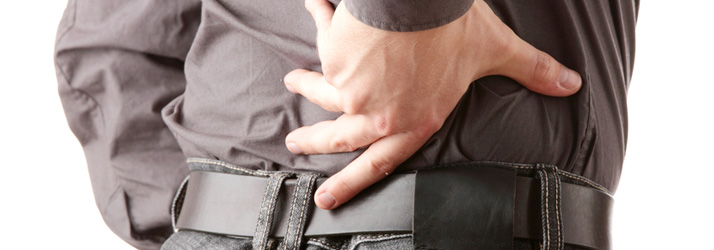
Chiropractors work with musculoskeletal problems, including concerns involving the spine and other joints. That does not mean chiropractic treatment is appropriate for every symptom. The U.S. Bureau of Labor Statistics describes the profession's work, and our guide to what a chiropractor can help with separates common questions and care pathways.
For readers whose main concern is back pain, this article from Source Chiropractic also explains how to discuss a disc finding without assuming that a scan tells the whole story.
Back pain has more than one possible explanation
Muscles, joints, discs and other structures may contribute to back pain, and some medical conditions can also cause it. Pain that lasts beyond a few days does not automatically mean a disc injury. The history and examination help determine what further evaluation is needed. NIAMS explains the range of causes.
What disc-report words do and do not tell you
Spinal discs sit between most vertebrae and help the spine absorb loads and move. A report may describe a bulge, meaning a broader extension beyond the disc's usual boundary, or a herniation, a more localized displacement. Protrusion and extrusion describe the shape of a herniation; they are not a simple scale of pain or disability. The joint NASS, ASSR and ASNR disc nomenclature consensus distinguishes these terms and separates structural descriptions from symptoms and treatment decisions.
A report needs to be interpreted alongside symptoms and examination findings. Do not assume an extrusion necessarily immobilizes the spine, or that an adjustment puts displaced disc material back into position. Our disc-injury guide and herniated-disc guide provide more context for discussing options.
Symptoms that need emergency care
Back or leg symptoms with new difficulty passing urine or inability to empty the bladder, loss of bladder or bowel control, numbness around the genitals, anus or inner thighs, or new sexual-function changes need immediate emergency assessment. Severe or worsening weakness in both legs is also a warning sign. These may indicate cauda equina nerve compression. Go to an emergency department now; call 911 if you cannot get there safely. Do not wait for a chiropractic appointment. AANS cauda equina guidance explains these symptoms.
Questions to ask about your report
- Does this finding match the location and pattern of my symptoms?
- What did the strength, sensation or reflex examination show?
- Would another test change the treatment decision?
- Which options fit my goals, and when should the plan be reassessed?
Treatment may include activity advice, exercise or physical therapy, and medicines when appropriate. Surgery is considered for particular causes and circumstances. Prolonged bed rest is generally discouraged. NIAMS treatment guidance explains those options. Ask about the risks and alternatives of any proposed manual treatment; our care-decision guide covers that conversation.
Bring the report if you already have one, but do not arrange a new scan simply to book a visit. Our new-patient information and contact page explain how to reach the office for a nonemergency appointment.
Follow the evidence
Research, with context.
Published sources behind the discussion. Read the findings alongside the limits; a study is not a diagnosis or a promise of a result.
Systematic literature review of imaging features of spinal degeneration in asymptomatic populations
33 studies reporting imaging findings in 3,110 people without symptoms.
What it foundDegenerative findings were common in people without pain and became more frequent with age. A scan needs interpretation alongside symptoms and examination findings.
What it cannot tell usThis does not mean every disc finding is harmless or that imaging is never needed. It cannot identify the cause of an individual patient’s pain.
Publication details & citation
Brinjikji et al. Systematic literature review of imaging features of spinal degeneration in asymptomatic populations. American Journal of Neuroradiology. 2015. DOI: 10.3174/ajnr.A4173.
Read the publication recordNoninvasive Treatments for Acute, Subacute, and Chronic Low Back Pain: A Clinical Practice Guideline From the American College of Physicians
Adults with acute, subacute or chronic low-back pain considering noninvasive management.
What it foundThe guideline prioritizes non-drug options for chronic low-back pain, including exercise. Spinal manipulation is one of several options, supported by lower-quality evidence.
What it cannot tell usA guideline synthesizes evidence rather than reporting a new experiment. It does not establish disc realignment, a universal cure or superiority over all other care.
Publication details & citation
Qaseem et al. Noninvasive Treatments for Acute, Subacute, and Chronic Low Back Pain: A Clinical Practice Guideline From the American College of Physicians. Annals of Internal Medicine. 2017. DOI: 10.7326/M16-2367.
Read the publication recordSurgery versus prolonged conservative treatment for sciatica
283 patients with severe sciatica lasting 6–12 weeks, assigned early surgery or prolonged conservative care with surgery if needed.
What it foundEarly surgery provided faster relief and recovery, while one-year outcomes were similar.
What it cannot tell usAbout 39% initially assigned conservative care had surgery. This was not a chiropractic trial and does not show that treatment shrinks discs or guarantees avoiding surgery.
Publication details & citation
Peul et al. Surgery versus prolonged conservative treatment for sciatica. New England Journal of Medicine. 2007. DOI: 10.1056/NEJMoa064039.
Read the publication record
Read our editorial policy for how sources and clinical review are identified.