Updated
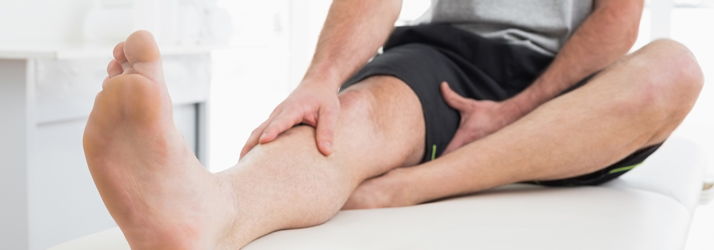
Knee pain deserves an explanation before a treatment choice. If you are exploring care without surgery, the useful questions are what is causing the pain, which options fit that diagnosis and when the plan should change. “Natural” does not establish that an approach is safer or more effective.
Start with the symptoms, not an alignment assumption
Pain after a twist, a swollen knee and gradually increasing stiffness can have different causes. These include ligament or meniscus injuries, tendon problems and osteoarthritis; pain alone cannot tell you which is present. The NHS knee-pain guide explains common patterns and when to seek care.
Before an appointment, note when the problem began, any injury, swelling, locking or giving way, and what has become difficult: stairs, walking, rising from a chair or sleep. Bring the names of treatments already tried and any relevant reports. These details give the discussion a more useful starting point than assuming the knee needs to be pushed back into position.
When knee pain needs urgent care
Seek urgent medical assessment for a knee that is very painful, cannot bear weight or move, is badly swollen or has changed shape. A hot, red knee with a high temperature also needs urgent assessment because infection is a possibility. Do not wait for a routine chiropractic visit for these symptoms. NHS: knee-pain warning signs.
What nonsurgical care can involve
For diagnosed knee osteoarthritis, NICE recommends tailored therapeutic exercise, information and support, with weight-management support when appropriate. Exercise can improve pain and function, although discomfort can initially increase. Those recommendations concern osteoarthritis; they are not a treatment plan for every knee injury. NICE osteoarthritis guidance, sections 1.2–1.3.
The same guideline says manual therapy should only be considered alongside exercise for hip or knee osteoarthritis, and that evidence does not support using it alone. That does not establish that an adjustment realigns the knee, restores worn cartilage or prevents knee replacement. Ask what a proposed hands-on technique is intended to change, its risks and how its added value will be assessed. NICE, recommendations 1.3.6–1.3.7.
Medicines can have a role alongside exercise and other care; a clinician or pharmacist can explain their suitability and risks. Joint-replacement referral can be appropriate when osteoarthritis substantially affects quality of life and nonsurgical management is ineffective or unsuitable. Choosing that assessment is not a failure. NICE, sections 1.4 and 1.6.
Make a second opinion useful
Ask for the working diagnosis, the reasons for it, the alternatives and a review point. Useful goals might include managing a particular flight of stairs or walking to a nearby shop; choose goals that matter to you rather than accepting a promise of a pain-free knee. Ask what lack of progress or new symptoms would prompt referral.
Explore our joint-pain guide and arm and leg pain guide for context. To discuss an assessment with Source Chiropractic, use our contact page. If the findings suggest a problem outside chiropractic care, the next step is an appropriate referral, not continuing an unsuitable treatment.
Current new-patient offer information is on our new-patient page.
Follow the evidence
Research, with context.
Published sources behind the discussion. Read the findings alongside the limits; a study is not a diagnosis or a promise of a result.
Physical Therapy versus Glucocorticoid Injection for Osteoarthritis of the Knee
156 patients with knee osteoarthritis in the US military health system.
What it foundPatients assigned physical therapy had less pain and disability at one year than those assigned glucocorticoid injection.
What it cannot tell usThis was a physical-therapy trial in a particular setting. It does not establish cartilage regeneration or validate every treatment offered for knee pain.
Publication details & citation
Deyle et al. Physical Therapy versus Glucocorticoid Injection for Osteoarthritis of the Knee. New England Journal of Medicine. 2020. DOI: 10.1056/NEJMoa1905877.
Read the publication record
Read our editorial policy for how sources and clinical review are identified.