Sports & Chiropractic
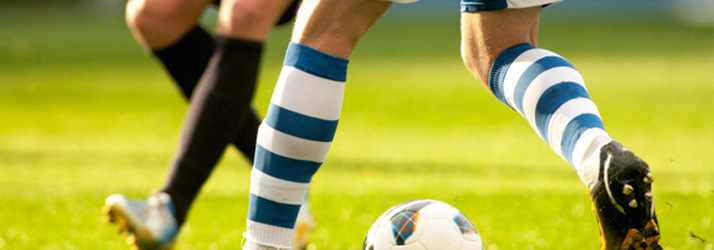
For an athlete, a useful care plan connects an assessment to a specific activity goal. The question is what will help you train or recover safely for your situation. Chiropractic treatment should not come with a promise of greater power, faster recovery or protection from future injury.
Separate an injury from a training question
Sports injuries can follow a sudden fall, impact or twist, or develop with repeated activity. NIAMS explains acute and overuse injuries. Tell the evaluating clinician what changed in your training and when symptoms began.
Bring details about the sport, position, training schedule, recent increases in load and any previous injury. Describe the movement you cannot currently perform rather than asking only whether something is “out of alignment.”
Stop and get assessed when needed
Do not continue an activity that causes injury pain. Severe pain, marked swelling, deformity or inability to bear weight needs medical assessment. NIAMS describes when to seek care and how rehabilitation fits recovery.
After a possible concussion, leave play immediately. Do not return the same day, and return only after clearance from a healthcare provider. CDC's HEADS UP guidance explains this process, including for youth athletes.
Call 911 or seek emergency care after a head injury with repeated vomiting, a worsening headache, seizure, increasing confusion, new weakness or difficulty waking. See the CDC concussion danger signs.
Build a return-to-activity plan
Depending on the injury, rehabilitation may include exercises to restore movement and strength, followed by a gradual return to activity. Ask who will guide that progression and what milestones you should meet before increasing the load.
If hands-on treatment is proposed, ask what symptom it targets and how it fits with active rehabilitation. Evidence of benefit for a pain condition does not establish that manipulation improves athletic performance or prevents sports injuries.
Questions for the care team
- What is the working diagnosis, and does it need further evaluation?
- Which activities can I do now, and which should wait?
- What changes in pain, strength or function are we tracking?
- Who makes the return-to-play decision?
- What would lead to referral or a different plan?
Our shoulder pain and back pain guides offer more detail for those areas. For a nonurgent concern, contact the office to ask whether an assessment is appropriate and how it could fit with your existing sports medicine or rehabilitation care.
Continue reading
Practice overview · New-patient visit details
Explore the knowledge atlas for guides to shoulder, elbow, hip, knee and ankle problems.
Follow the evidence
Research, with context.
Published sources behind the discussion. Read the findings alongside the limits; a study is not a diagnosis or a promise of a result.
Effect of unsupervised home based proprioceptive training on recurrences of ankle sprain: randomised controlled trial
522 athletes aged 12–70 with a recent lateral ankle sprain, receiving usual care with or without an eight-week home balance program.
What it foundOver one year, 22% of the training group reported another sprain, compared with 33% of the usual-care group.
What it cannot tell usRecurrences were self-reported. This supports rehabilitation after an ankle sprain; it does not test manipulation or promise immediate pain relief.
Publication details & citation
Hupperets et al. Effect of unsupervised home based proprioceptive training on recurrences of ankle sprain: randomised controlled trial. BMJ. 2009. DOI: 10.1136/bmj.b2684.
Read the publication recordAcute effects of muscle stretching on physical performance, range of motion, and injury incidence in healthy active individuals: a systematic review
Studies of stretching before activity in healthy, physically active participants.
What it foundStretching can increase range of motion acutely. Longer static stretches immediately before performance had larger performance reductions than shorter holds; the surrounding warm-up mattered.
What it cannot tell usThese are mostly immediate responses in healthy people. More range is not automatically less pain, and these findings do not establish treatment for an injured tendon, unstable joint or irritated nerve.
Publication details & citation
Behm et al. Acute effects of muscle stretching on physical performance, range of motion, and injury incidence in healthy active individuals: a systematic review. Applied Physiology, Nutrition, and Metabolism. 2016. DOI: 10.1139/apnm-2015-0235.
Read the publication record
Read our editorial policy for how sources and clinical review are identified.