What Causes Inflammation
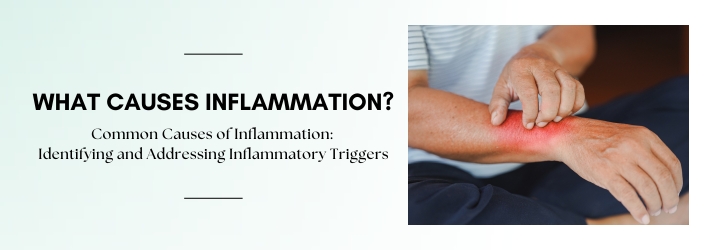
Inflammation is an immune response, not a diagnosis. It can help the body respond to an injury or infection; in other circumstances it persists and damages tissue. The useful question is what is causing the symptoms and which kind of care addresses that cause. A sore joint, a blood-test result and an autoimmune disease should not all lead to the same treatment plan.
Start with the pattern, not an “inflammation score”
| What you notice | What needs clarifying |
|---|---|
| New pain after an identifiable injury | Which tissue may be injured, whether examination or imaging is needed, and what activity is safe |
| Persistent joint swelling or prolonged morning stiffness | Whether an inflammatory joint disease needs medical investigation |
| A raised C-reactive protein (CRP) result | Why it was measured, what else could explain it, and whether follow-up testing is appropriate |
| Pain that changes with loading or movement | Whether there is a musculoskeletal problem; pain alone does not establish its cause |
A CRP test can help a clinician assess inflammation, but it cannot identify its location or cause by itself. Medicines, health history, symptoms and other test results affect interpretation. Do not stop a prescription or buy a supplement in response to one number. MedlinePlus explains CRP testing.
A hot, swollen joint can need urgent care
Seek urgent medical assessment for sudden severe joint pain with swelling or a change in skin color, particularly if you have fever, chills or feel unwell. Infection inside a joint is one possible cause and needs prompt treatment. Do not wait for an adjustment or assume it is ordinary exercise soreness. NHS guidance on septic arthritis.
Persistent inflammation is not always a lifestyle problem
Rheumatoid arthritis is an autoimmune disease that can cause joint swelling, stiffness and fatigue. Both sides of the body are often affected, and symptoms can involve more than the joints. Its causes involve more than a simple dietary choice. Persistent swelling or a changing pattern deserves medical assessment, even if you also have a physically demanding job or a recent change in exercise. NIAMS overview of rheumatoid arthritis.
For confirmed rheumatoid arthritis, treatment aims to control the disease as well as symptoms. The American College of Rheumatology guideline focuses on disease-modifying medicines and monitoring. Temporary pain relief after massage, exercise or manual care is not proof that autoimmune disease activity is controlled. Keep the prescribing clinician involved in any treatment decisions.
What movement and manual care can contribute
Activity can support general health, but its type and amount should fit your capacity and diagnosis. The WHO activity guideline is a population recommendation, not a prescription to exercise through an acutely swollen joint. A rehabilitation plan can define a tolerable starting point and how to adjust it.
For a separate musculoskeletal complaint, an examination may help identify options for pain and movement. Chiropractic care does not replace treatment for infection or inflammatory disease. A useful plan names the problem being treated, the intended benefit, alternatives and when to reassess.
Bring these details to the conversation
Write down which joints are affected, when symptoms began, how long morning stiffness lasts, any visible swelling, and changes in daily activities. Bring your medication list and relevant laboratory reports with dates. Ask: “What is the working explanation, what still needs investigation, and who is coordinating my care?”
Read joint pain and inflammation for more on the distinction between symptoms and disease. For a movement-related concern, contact our team to discuss an assessment. For unexplained swelling or illness, start with medical care.
Follow the evidence
Research, with context.
Published sources behind the discussion. Read the findings alongside the limits; a study is not a diagnosis or a promise of a result.
2021 American College of Rheumatology Guideline for the Treatment of Rheumatoid Arthritis
People with rheumatoid arthritis, including recommendations for disease-modifying medication and management strategies.
What it foundTreatment recommendations center on disease-modifying medicines and monitoring disease activity, with decisions informed by the patient’s circumstances and preferences.
What it cannot tell usMany recommendations are conditional. This is not a study of manual therapy, and symptom relief from hands-on care cannot demonstrate control of an autoimmune disease.
Publication details & citation
Fraenkel et al. 2021 American College of Rheumatology Guideline for the Treatment of Rheumatoid Arthritis. Arthritis Care & Research. 2021. DOI: 10.1002/acr.24596.
Read the publication recordWorld Health Organization 2020 guidelines on physical activity and sedentary behaviour
Recommendations for children, adolescents, adults and older adults, including people living with selected chronic conditions or disability.
What it foundThe guideline recommends regular activity, strength work and less sedentary time. For adults, the general target is 150–300 minutes of moderate activity or 75–150 minutes of vigorous activity weekly.
What it cannot tell usPopulation targets need adaptation to health, capacity and recovery. Some activity is better than none; this guideline does not test chiropractic treatment or prescribe rehabilitation for an injury.
Publication details & citation
Bull et al. World Health Organization 2020 guidelines on physical activity and sedentary behaviour. British Journal of Sports Medicine. 2020. DOI: 10.1136/bjsports-2020-102955.
Read the publication record
Read our editorial policy for how sources and clinical review are identified.